

Icy Landscape in Minecraft look
Animation of an icy landscape in Minecraft style with real-time graphics.
Challenge
The old internal engine was no longer technically viable, as even short animations consumed weeks of render time, and the engine has since been removed from Blender.
Solution
With Eevee, we produce high-quality results in seconds instead of hours, increasing our production capacity many times over and perfectly matching Minecraft's stylized design.
About the Project
Minecraft animations were long a staple of our creative work, but then we had to take a break. The reason was a technical dilemma that had intensified over years: our previous productions were created with an outdated rendering engine whose computational demands grew with each project. A single frame sequence required approximately three hours of processing time. A single minute of animation thus consumed over a week of pure computing power, assuming our hardware ran without interruption. The more ambitious the projects became, the longer the process dragged on. With the introduction of Eevee, Blender's new real-time rendering engine, the situation has fundamentally changed. This technology operates on the same principle as the graphics engines of modern video games and delivers results in real-time instead of hours. Concretely, this means: an image that previously took several minutes now emerges in just a few seconds. The visual quality has increased manifold, while the required time has dropped dramatically.
Critical to our workflow is the insight that Minecraft animations don't necessarily require photorealistic rendering. The game world itself thrives on its characteristic, cube-shaped aesthetic. This is exactly where Eevee plays to its strengths: the engine achieves an elegant balance between speed and visual sophistication that ideally supports Minecraft's design language. With modern PBR shaders, we can also flexibly switch between different rendering methods without reconstructing our projects from scratch. This is evident, for example, in our realization of a frozen icy landscape, which emerged as part of a larger, still incomplete project and already demonstrates how efficiently and high-quality our new workflow operates. In this animation, we still rely on the proven Z-buffer-based fog effect for distant fog, a reliable solution for scene clarity. However, our experiments with volumetric fogs in the animation Synthwave Canyon show promising perspectives. In the future, we will increasingly employ these true volumetric fogs to achieve even more atmospheric and realistic depth effects.
We look forward to returning to what defines us: the production of high-quality Minecraft animations at a speed and frequency that was previously simply unattainable. Long-stagnating projects can finally be completed, while new endeavors emerge with an efficiency that significantly enriches our creative work.
Media
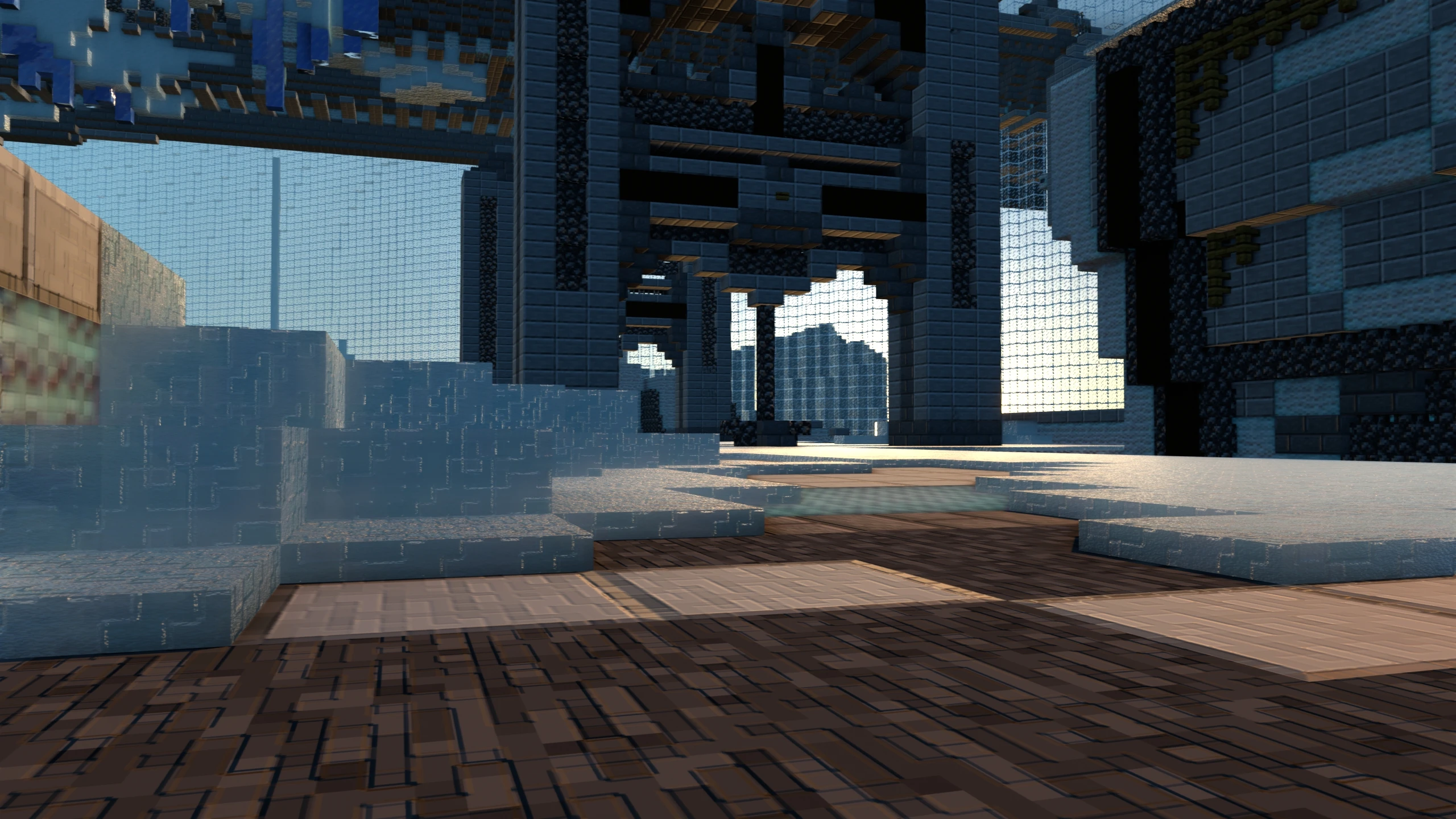
Broken Bridge
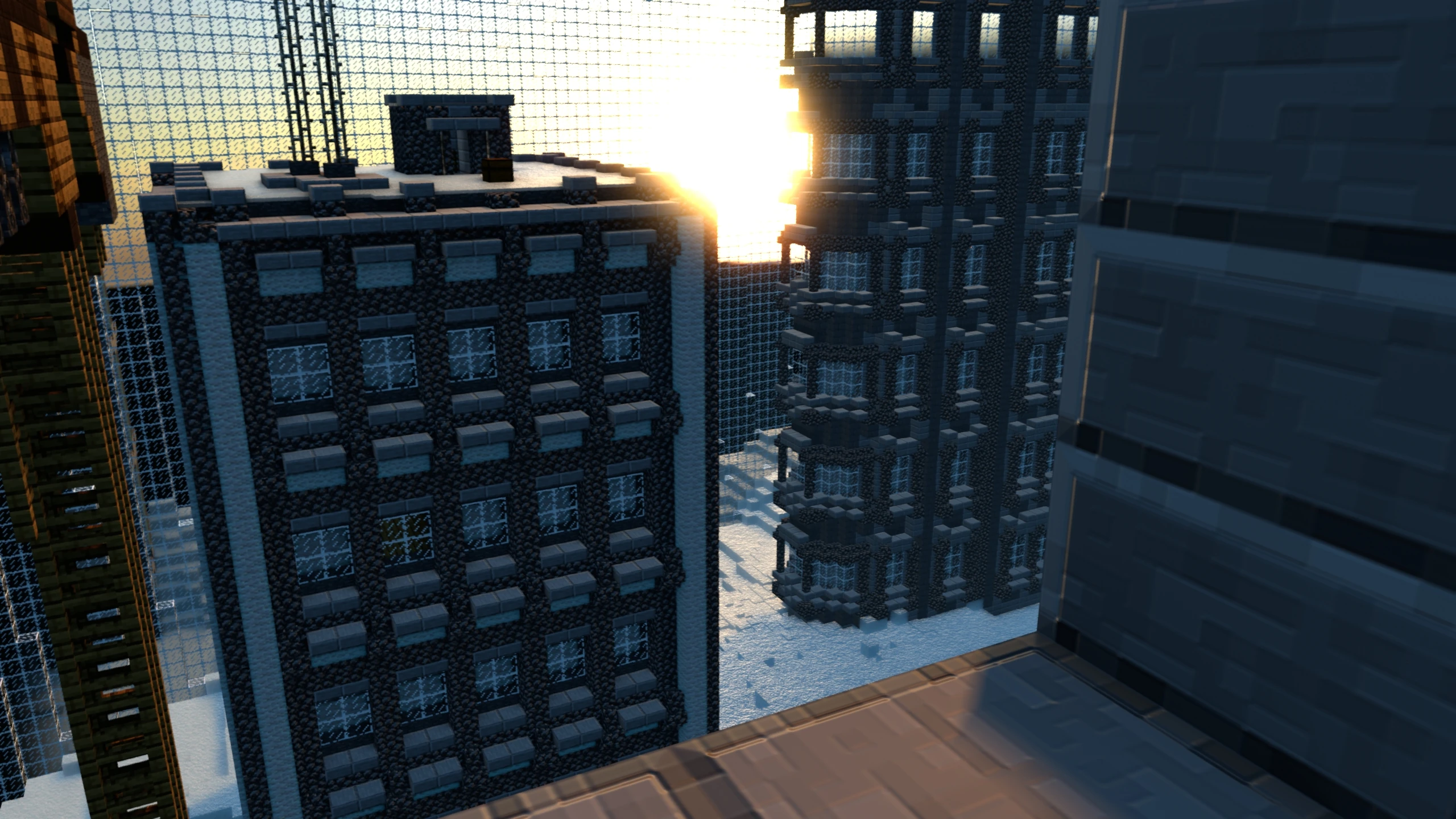
Skyscrapers
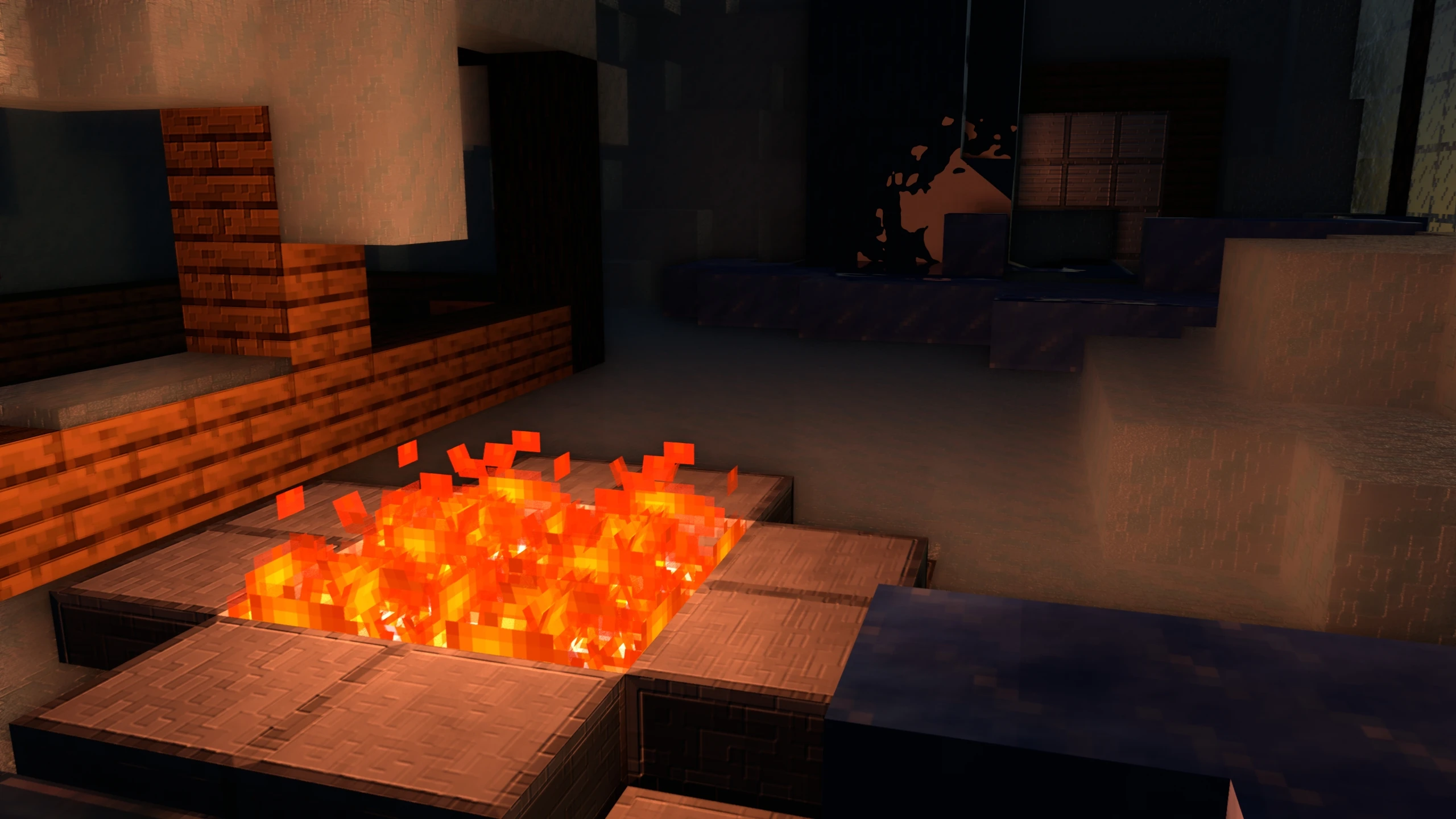
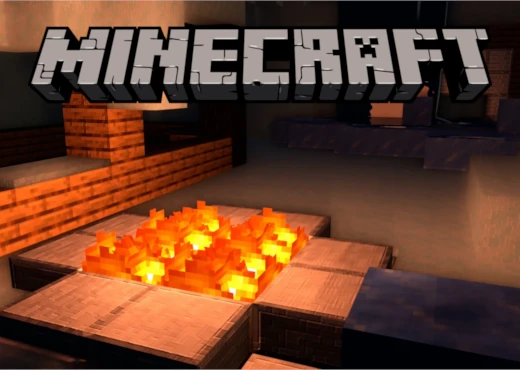
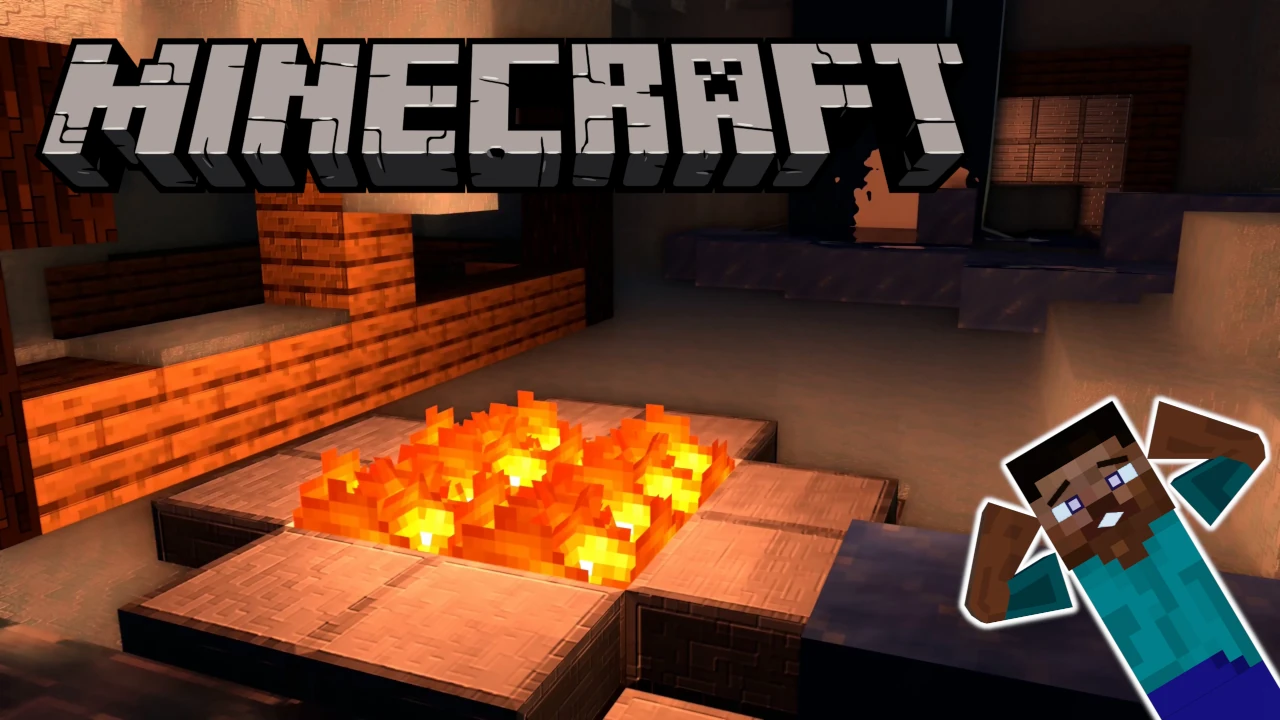
Fire Pit
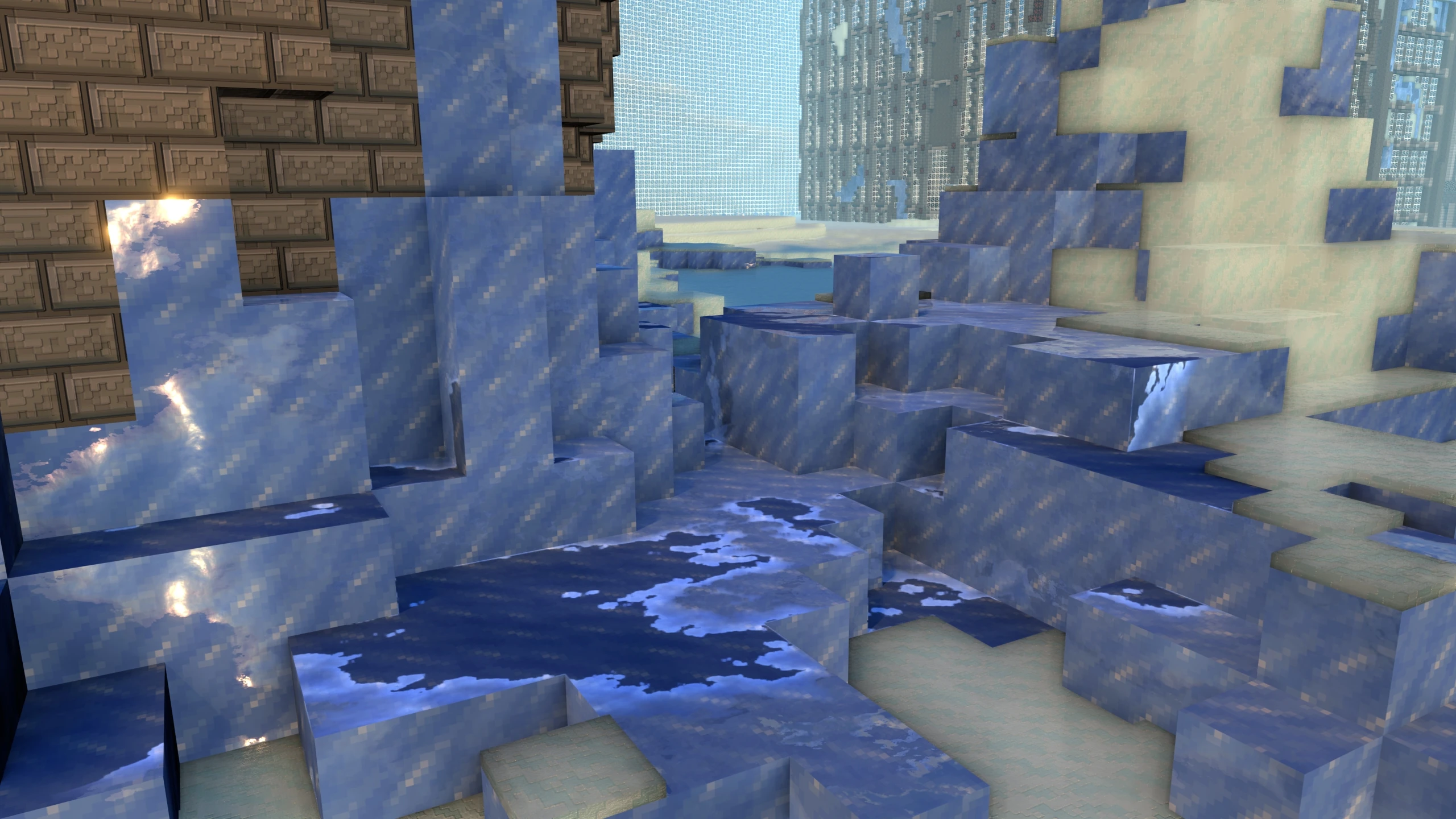
Ice-Covered Stone Pillars
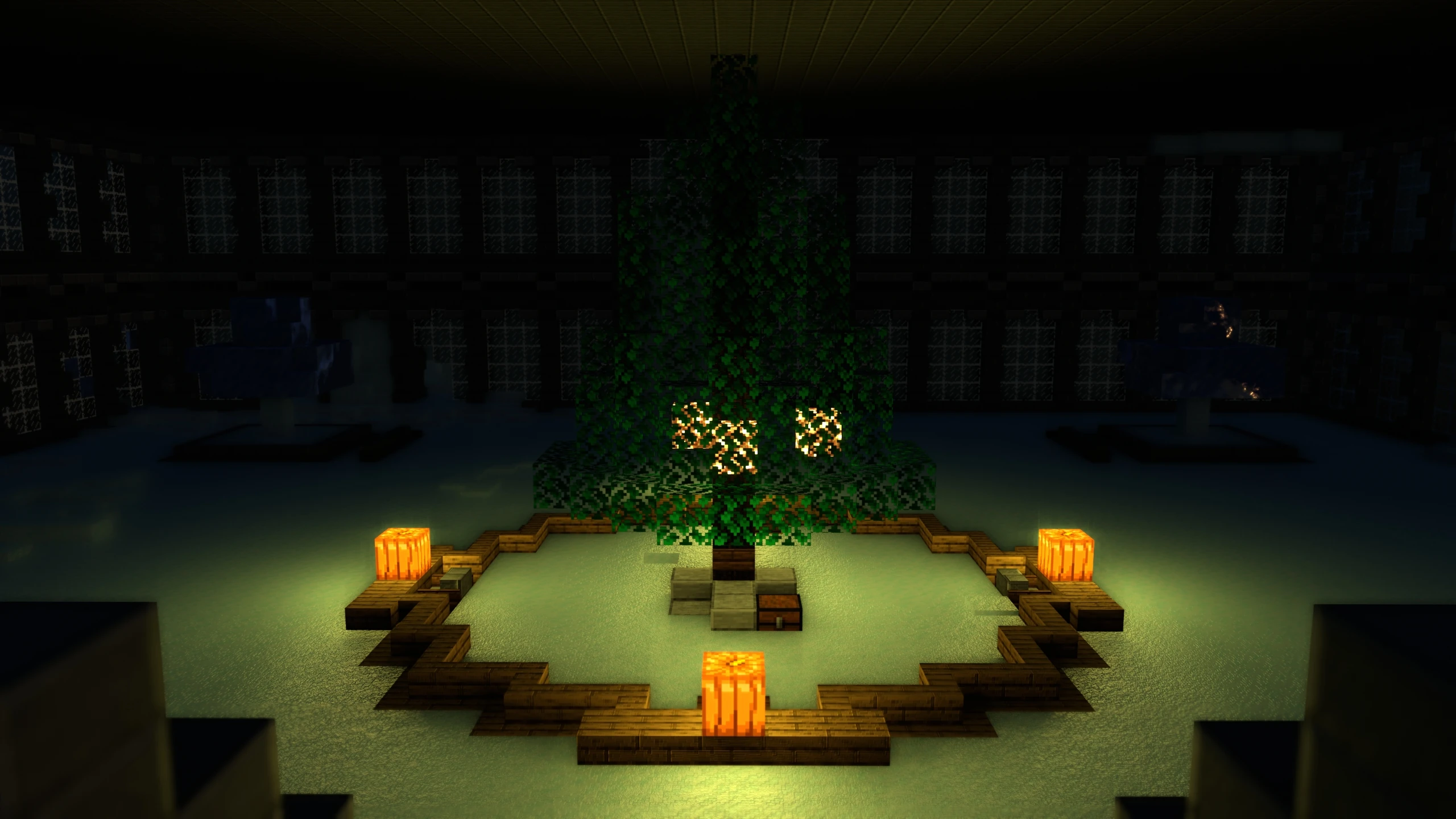
Pine Tree
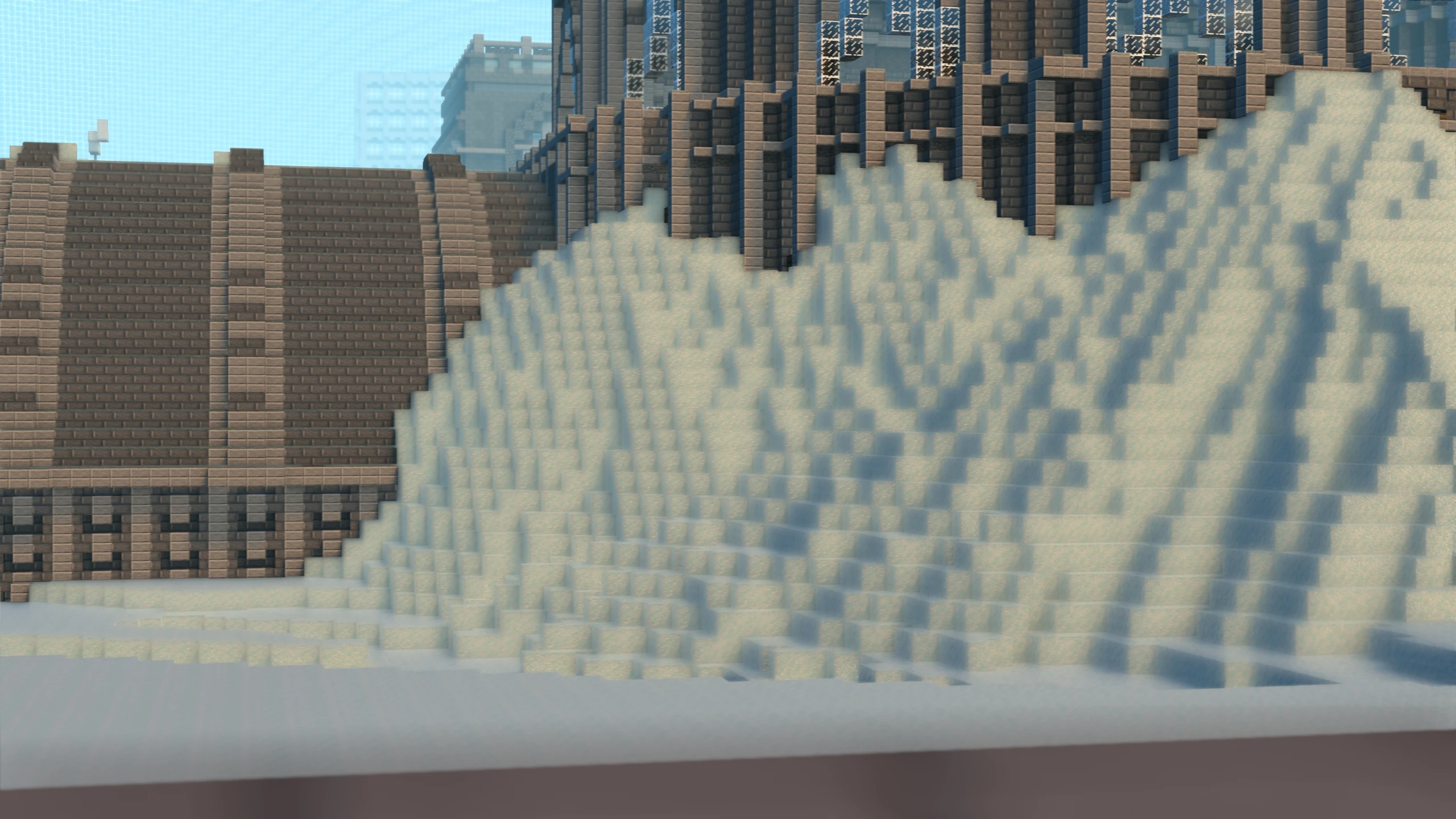
Building Sunken in Snow
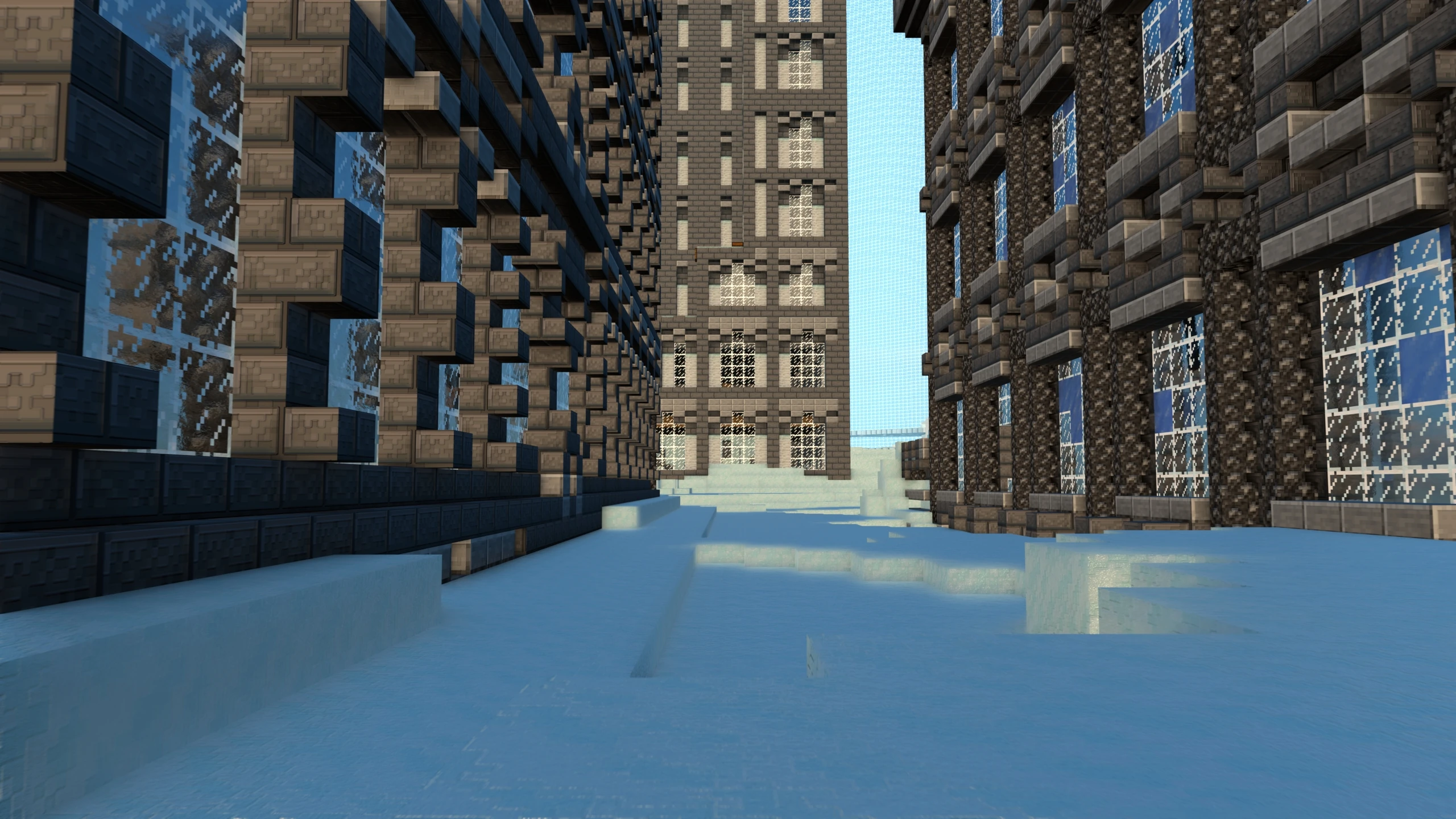
Street Canyon
